
How do you determine the value of a life?
While there is no universally accepted answer, one thing is clear: it should not be based on a person’s income.
Unfortunately, that is largely how New York’s wrongful death law works. When someone dies because of another person’s negligence, surviving family members can generally recover only for pecuniary, or financial, losses. The law recognizes lost wages and financial support, but not the grief, guidance, or emotional support that person brought to their family.
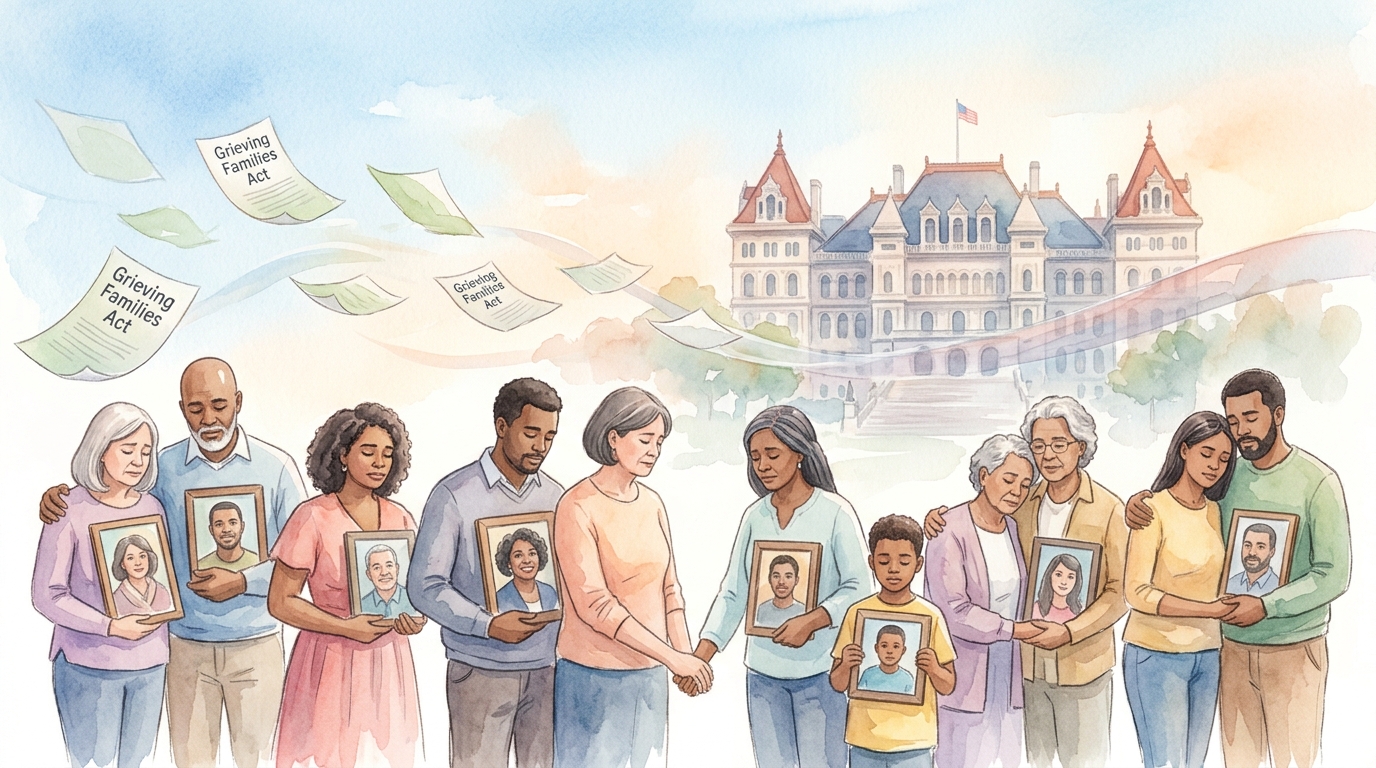
Only a handful of states still limit wrongful death damages this way. The Grieving Families Act (S.10171/A.11340) seeks to change New York’s laws. In addition to recognizing the non-economic impact of a wrongful death case, the proposed act would:
- Expand who can recover damages beyond traditional estate distributees to include parents, grandparents, step-parents, and domestic partners.
- Lengthen the time frame allowed to file a wrongful death lawsuit from two years to three years.
Although the Legislature has repeatedly passed versions of the Grieving Families Act, Governor Kathy Hochul vetoed the most recent bill in 2025. Governor Hochul has expressed concern about the bill’s potential economic impact. In an op-ed, she wrote that the proposal could “drive up already-high health insurance premiums” and argued that its fiscal effects should be carefully studied before making such a significant change to New York law.
She did not, however, propose an alternative framework in place of the legislation. Lawmakers responded to Hochul by introducing revised legislation in 2026, which is now pending before the Senate and Assembly Judiciary Committees.
While her concerns matter, they should not end the conversation. Courts and juries already evaluate non-economic damages, such as pain and suffering, in personal injury cases. Wrongful death claims should not be treated differently simply because the injured person did not survive. Recognizing grief does not guarantee larger awards; it simply allows courts to consider the full impact of a preventable death.
The consequences of the current law are difficult to ignore. The wrongful death of a child, retiree, or stay-at-home parent often results in far less compensation than the death of a high-income earner, not because the loss is any less profound, but because the law places greater weight on lost earnings than on lost relationships.
New York’s wrongful death statute has remained largely unchanged since 1847. The Grieving Families Act offers an opportunity to bring the law in line with the rest of the country and recognize that the value of a life does not equate to a paycheck.
If you believe New York families should be able to recover for the full loss of a loved one, contact your state senator and assembly member and urge them to support the Grieving Families Act.
Find your elected officials here: New York State Legislature – Find My Legislator
Authored by Hannah Taylor